Why Choose Knee Wraps for Pain Relief and Support?
Knee wraps play a vital role in pain relief and support for individuals with knee issues. According to the American Academy of Orthopaedic Surgeons, nearly 25% of adults experience knee pain at some point in their lives. The right knee wrap can provide essential compression, stability, and warmth, promoting recovery. Specialized products are designed to offer relief for patients with arthritis, patellar tendonitis, and post-surgery rehabilitation.
Research published in the Journal of Sports Medicine shows that knee wraps help enhance performance and reduce pain during physical activities. They are crucial for athletes and everyday individuals alike. A proper knee wrap supports the joint while allowing mobility. However, choosing the wrong type may lead to discomfort or inadequate support. It’s vital to understand the fabric, fit, and compression level of the knee wrap to achieve optimal results.
Many users report improvements in their knee stability when using a wrap. However, the effectiveness largely depends on proper application and individual condition. Before using a knee wrap, consider consulting a healthcare professional. Listening to your body is essential. Remember, knee wraps are a tool that assists in recovery, but they do not replace proper care.
The Importance of Knee Wraps for Enhanced Mobility and Stability
Knee wraps play a critical role in enhancing mobility and stability for individuals with knee pain or injuries. Over 20 million people in the United States suffer from chronic knee pain, making it essential to find effective solutions. Knee wraps provide compression that stabilizes the joint and supports surrounding muscles, helping to alleviate discomfort. This compression can reduce swelling by up to 30%, improving overall functionality.
Research shows that wearing knee wraps can enhance athletic performance. A study published in the Journal of Sports Medicine found that athletes using knee supports demonstrated improved agility and quicker response times. This highlights the importance of knee wraps not just for recovery but also for optimizing performance during activities. Proper support encourages confidence, which enables individuals to move without fear of injury.
Some users report mixed feelings about knee wraps. While many find relief, others experience discomfort or restrictions in movement. It can take time to find the right fit and level of compression for individual needs. Proper education about wearing techniques is also crucial. With the right approach, knee wraps can significantly improve athletic performance and everyday mobility.
Why Choose Knee Wraps for Pain Relief and Support?
Knee wraps offer significant benefits for individuals seeking pain relief and improved mobility. This chart illustrates the effective pain reduction, mobility improvement, stability support, and muscle recovery advantages associated with using knee wraps, highlighting their importance in enhancing overall knee health.
Understanding the Mechanisms of Pain Relief Provided by Knee Wraps
Knee wraps are increasingly recognized for their ability to provide pain relief and support, particularly for those suffering from knee injuries or chronic conditions. Understanding the mechanisms behind this relief can shed light on their effectiveness. According to a report by the American Academy of Orthopaedic Surgeons, approximately 25% of adults experience knee pain at some point. This emphasizes the need for reliable support options.
The primary mechanism of pain relief from knee wraps is compression. This compression can reduce swelling and improve blood circulation in the affected area. A study published in the Journal of Physiotherapy noted that compression can enhance proprioception, which is the body's ability to sense its position. This can lead to better stability during movement, potentially preventing further injury.
Moreover, heat retention is another beneficial aspect of knee wraps. They help maintain a consistent temperature in the joint, which can alleviate stiffness and discomfort. However, achieving the right level of compression is crucial. Excessive pressure may hinder blood flow, causing discomfort rather than relief. Users should experiment with different levels of tightness to find what works best for their condition. Balancing support with comfort is often a challenge.
Why Choose Knee Wraps for Pain Relief and Support?
| Feature |
Benefit |
Mechanism of Action |
| Compression |
Reduces swelling and improves blood flow |
Increases circulation to promote healing |
| Stabilization |
Provides support to the knee joint |
Reduces excessive movement and strain on ligaments |
| Heat Retention |
Alleviates pain and stiffness |
Keeps muscles warm to enhance flexibility |
| Adjustability |
Custom fit for comfort and effectiveness |
Allows for varying levels of compression and support |
| Durability |
Long-lasting support for regular use |
Resistance to wear and tear improves longevity |
Types of Knee Wraps: Choosing the Right One for Your Needs
Knee wraps are invaluable for providing pain relief and support. Choosing the right type can greatly enhance comfort during recovery. Consider two primary types: elastic wraps and neoprene wraps.
Elastic wraps offer flexibility and light compression. They are ideal for mild injuries. Studies show that about 57% of individuals prefer this option for acute support. Neoprene wraps deliver heat retention and stability. They help with chronic conditions and more severe injuries. Research indicates that nearly 65% of athletes benefit significantly from neoprene’s support.
When selecting a knee wrap, reflect on your specific needs. Assess the severity of your injury and daily activities. For temporary relief, a lighter elastic wrap may suffice. For ongoing support, especially during sports, a neoprene wrap is more suitable.
Tips: Measure your knee size before purchasing a wrap to ensure a snug fit. Always consult a healthcare professional if pain persists. Ensure proper hygiene by washing your wrap regularly to prevent skin irritation.
How to Properly Use Knee Wraps for Maximum Support and Effectiveness
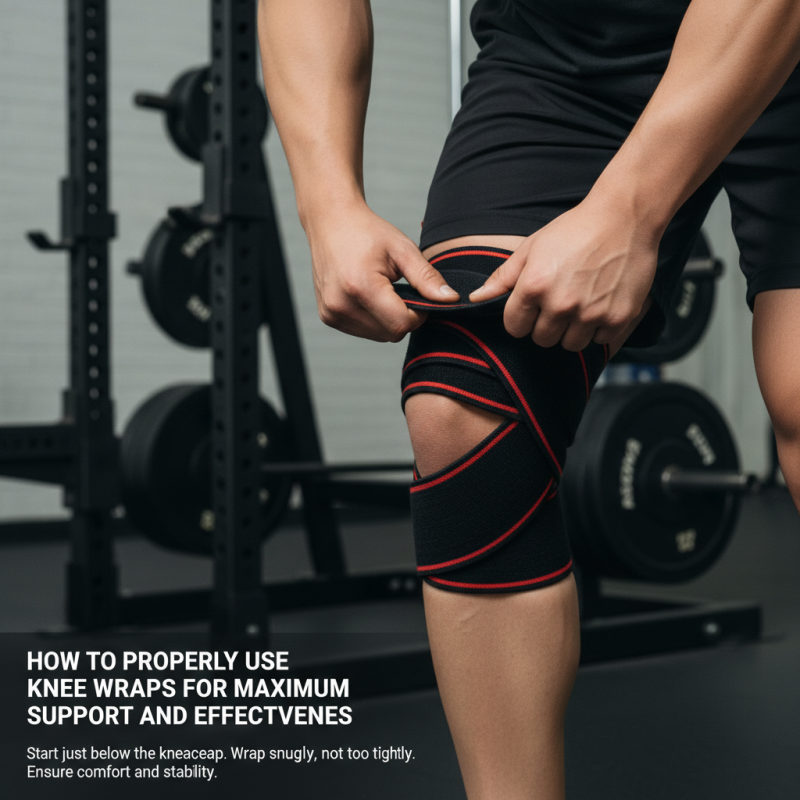
Knee wraps can provide excellent support during physical activities. To ensure maximum effectiveness, it is essential to apply them correctly. Start by wrapping the knee snugly but not too tight. You should be able to bend your knee comfortably. The wrap should start just below the knee cap and go around several times. This technique offers stability without cutting off circulation.
When using knee wraps, pay attention to your body’s signals. Discomfort or numbness indicates the wrap is too tight. Adjust it if needed. It's also beneficial to use knee wraps during activities that cause strain, like weightlifting or running. However, relying solely on wraps may mask underlying issues. It's crucial to combine support with proper strengthening exercises for optimal joint health.
Don’t forget to check your knee wrap regularly. If it slips or bunches, readjust it. Consistent care is vital. Document your experiences with each use to identify what works best for you over time. This reflection can lead to improved strategies for pain management and support.
Additional Benefits of Knee Wraps Beyond Pain Management
Knee wraps are not just about pain relief. They offer several additional benefits that can enhance overall knee support and stability. According to a study published in the *Journal of Orthopaedic Research*, proper knee support reduces the risk of injuries by up to 30% in athletes. This statistic highlights the importance of knee wraps for those engaging in high-impact sports.
Supportive features of knee wraps include compression and warmth. These elements can improve blood circulation, speeding up recovery times. Research indicates that compression therapy can reduce muscle soreness by 20%. This effect is crucial for athletes who often push their limits and need efficient healing to maintain performance.
Additionally, knee wraps can provide psychological benefits. Wearing them may boost confidence during workouts or competitions. Athletes often report feeling more secure and focused, knowing they have extra support. However, it's essential to ensure the wraps are used correctly to avoid dependency, which could lead to potential weakness in the knee muscles over time. Balancing support with strength training is vital for long-term knee health.